Who is J.D. Power?
James David Power III was thirty-six years old and working from his own kitchen table when he opened J.D. Power and Associates on April 1, 1968, and the associates in the company name were his wife and his children, who helped stuff the envelopes. He died at eighty-nine in Westlake Village, California on January 23, 2021. So the question two comedians spend eight minutes shouting about on episode eight of The Worst Podcast Ever has a plain answer with dates attached to it: J.D. Power was a person, he built a survey company that now runs out of Troy, Michigan with more than 2,300 employees, and the thing that shows up at the end of a car commercial is narrower than general approval. The hosts are right that almost nobody buying a car knows any of this, and they are right about one uncomfortable mechanic inside the awards business. They are wrong about the junkyard.
Hear it yourself
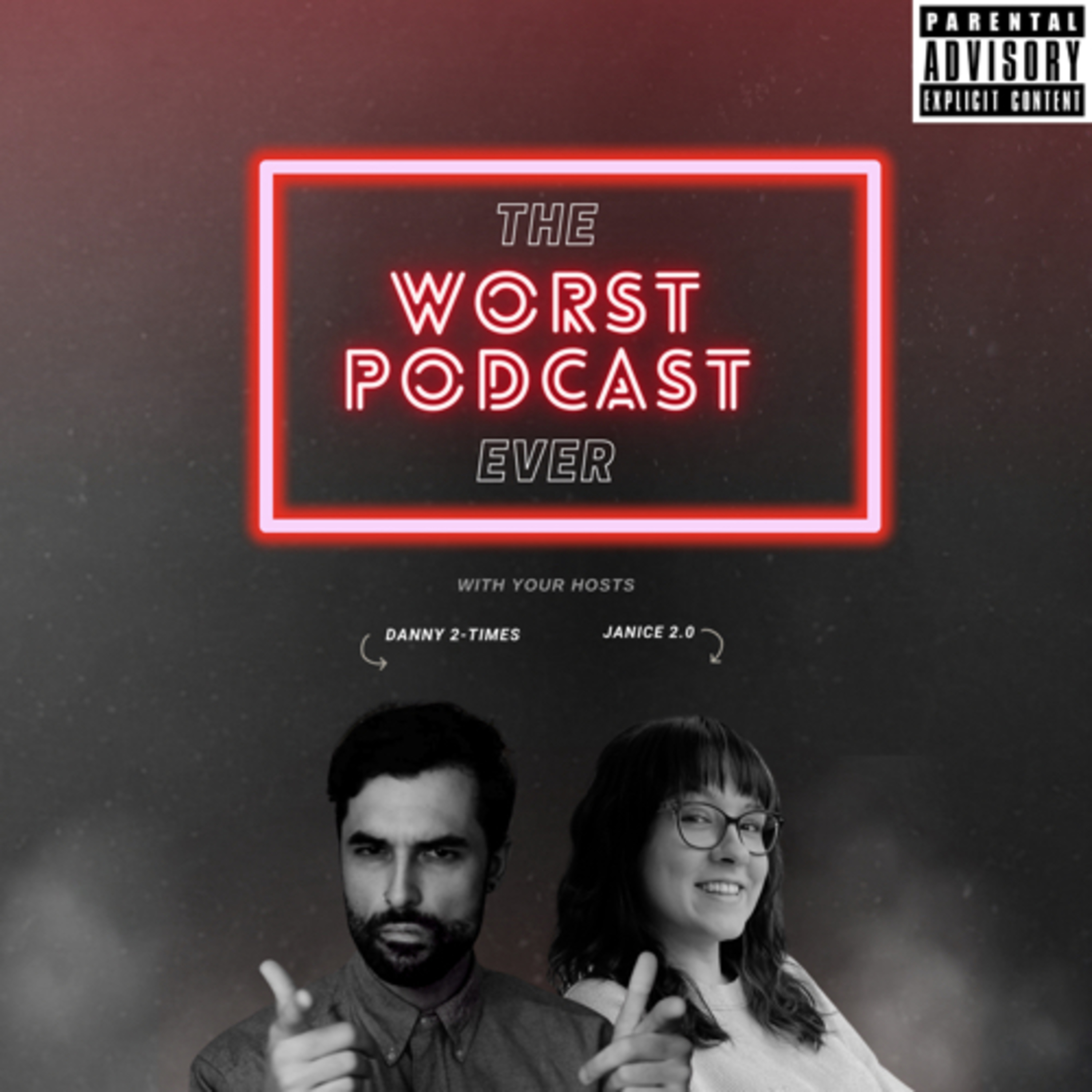
TWPE Ep. 8 [12/15/23] Who The FUCK Is JD Power?
The Worst Podcast Ever · Dec 15, 2023 · 19 min
Tap any timestamp below to jump straight to that moment.
Worcester, an icebreaker, and a desk at Ford
Power was born in Worcester, Massachusetts on May 30, 1931, took a bachelor's degree at the College of the Holy Cross in 1953, and went on to an MBA in finance at the Wharton School, according to Wikipedia's biography of him. Before any of the research work he spent four years as a line officer aboard the USCGC Eastwind, a Coast Guard icebreaker that worked both the Arctic and the Antarctic. His corporate career ran through Ford Motor Company as a financial analyst, then marketing research for Marplan on the Buick and GMC accounts, then the J.I. Case Company, then a job as director of corporate planning at McCulloch. The pattern is worth reading closely, because a man who has sat inside a Detroit manufacturer's own research function knows exactly which questions the manufacturer is not asking its customers. He started asking them himself in 1968, and the Automotive Hall of Fame inducted him in 2014.
A set of O-rings in a Mazda rotary engine
The firm's first widely noticed piece of work came out of a household operation rather than a laboratory. Wikipedia's account of those early years credits Julia P. Power, his wife, with spotting a design flaw in the O-rings of certain Mazda rotary engines inside the survey responses the family was collecting, and The Wall Street Journal published the finding. That episode set the business model that every J.D. Power award still rests on. Owners notice mechanical problems long before a manufacturer concedes them, those complaints look like noise one at a time, and a company that collects enough of them in a consistent format can report a defect pattern that nobody inside the factory has published yet. Automakers bought the research because it was cheaper than discovering the same thing through warranty claims.
What the surveys are actually counting
J.D. Power publishes the answer to this on its own awards FAQ, and the wording deserves more attention than it gets. "All rankings are based on the opinions of a sample of consumers from a variety of industries who have used or owned the product or service being rated," the company writes. A second line on the same page does more work: "Results are based on measures of customer experience and not necessarily on statistical significance." Read that slowly. An award can rest on a gap between two brands that a statistician would decline to call a real difference, and the company says so in public. That does not make the research worthless, because a large sample of verified owners rating their own vehicles is a genuinely useful instrument. It does mean the plaque measures reported satisfaction inside a defined category during a defined study year, which is a much smaller claim than the commercial implies.
"It's really unfair because clearly he's just someone who's been able to pay his way. We don't know this man. He hasn't come down from his golden pedestal to interact with the people."
The half the hosts get right
Janice 2.0 is wrong about the pedestal and accidentally close to the truth about the paying. J.D. Power does not sell rankings, and the studies decide who wins. What the company sells is the right to talk about winning. Its awards FAQ states that "only the highest-ranked performers in pre-defined categories are eligible to license the use of JD Power awards in advertising," and licensing is a commercial arrangement with a price. So the trophy is earned and the billboard is bought, which means the awards a car shopper sees most often are the ones a marketing department decided were worth paying to repeat. A brand that wins a study and skips the licensing simply never appears in a commercial, and the shopper never learns it won.
"But when you ask yourself, who really is JD Power? Do you know, or do you just blindly follow the same marketing techniques that these big car companies use? They invent some kind of certification that seems to add some kind of value to the car."
Reading the fine print at the end of a car commercial
Four questions turn a J.D. Power line from decoration back into information. Which study produced it, since the automotive awards run across more than two dozen separate studies covering initial quality, dependability, sales satisfaction, service, and vehicle dependability at three years of ownership, and those measure completely different things. Which year, because a 2021 award on a 2026 model tells you about a vehicle built five years ago. Which category, because a segment can be narrow enough that the field held three competitors. And which measure, since initial quality counts problems reported in the first ninety days of ownership and says nothing about what happens at eighty thousand miles. A commercial that names all four is being straight with you. One that flashes a logo and moves on is selling the logo.
"So make sure you're making informed decisions about your vehicle purchases, guys. Don't believe JD Power. He just wants more power."
Where episode eight stops describing reality
The Worst Podcast Ever opens every episode by telling you it is fabricated, and this one earns the warning. J.D. Power does not live in a junkyard, does not sit on a throne built from Subaru BRZ parts, does not wear chainmail forged from car panels, and is not guarded by green men or dogs. He did not scatter tacks through a village to manufacture flat tires, he was never named J.D. Weakman, and he had nothing to do with Wheaties. The Howie Mandel snake cloning segment that opens the episode is invented as well. The show is a scripted comedy built on the joke that it reports nothing true, and the only reason it produces a usable article is that the underlying confusion is real: a name appears in thousands of car advertisements every year and almost nobody can say whose name it is.
The short version
- J.D. Power was James David Power III, born in Worcester, Massachusetts on May 30, 1931 and died January 23, 2021.
- He opened J.D. Power and Associates on April 1, 1968 from his kitchen table, after working as a financial analyst at Ford Motor Company.
- The firm's early reputation came from survey data that identified an O-ring design flaw in certain Mazda rotary engines, a finding The Wall Street Journal published.
- J.D. Power's own awards FAQ states that results are based on measures of customer experience and not necessarily on statistical significance.
- Rankings are not for sale, but advertising a win is: only top-ranked performers are eligible to license the award for use in advertising.
- Power sold the company to McGraw-Hill in 2005, and the private equity firm Thoma Bravo acquired it in 2019.
People also ask
Is J.D. Power a real person?
He was. James David Power III founded the firm in 1968 and died on January 23, 2021 at the age of eighty-nine. The company continues under his initials and is headquartered in Troy, Michigan.
Do car companies pay J.D. Power for awards?
They do not buy the ranking. J.D. Power's awards FAQ says only the highest-ranked performers in pre-defined categories are eligible to license the award for use in advertising, so a manufacturer pays for the right to advertise a result it has already earned in the study.
Does the episode of The Worst Podcast Ever contain real information about J.D. Power?
No. The episode is scripted comedy and states at the start that everything in it is false. The junkyard, the throne made of car parts, the chainmail and the tacks in the road are all invented by the hosts. The only real element is the question they start from.
Biographical and corporate facts in this article come from Wikipedia's entries on J.D. Power and James David Power III, including the April 1, 1968 founding, the Mazda rotary engine O-ring finding reported by The Wall Street Journal, the 2005 sale to McGraw-Hill and the 2019 acquisition by Thoma Bravo. The statements about how rankings are produced and who may license an award for advertising are quoted from J.D. Power's own awards FAQ at jdpower.com. Quotations from The Worst Podcast Ever, episode 8, are transcribed from the episode audio with timestamps and are lightly cleaned of filler words. The episode is a scripted comedy that announces its own content as false, and nothing the hosts assert about J.D. Power is presented here as fact.